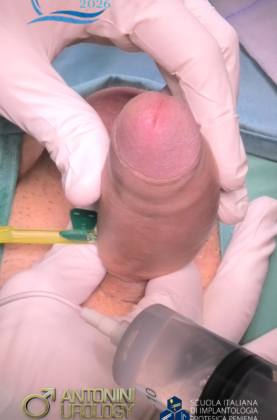
Urological surgery, particularly prosthetic surgery, represents a field of medical excellence aimed at restoring vital functions and significantly improving patients’ quality of life. Among the most delicate and specialized procedures is the explantation and subsequent re-implantation of a hydraulic penile prosthesis. A revision surgery like this is not just a surgical act; it is often the culmination of a complex diagnostic and therapeutic journey faced by patients living with severe erectile dysfunction or complications related to previous implants. The opportunity to witness a “live surgery” of this caliber, condensed into just 37 minutes, offers a unique and incredibly instructive perspective. A hydraulic penile prosthesis is an implantable medical device designed to restore erectile function in men suffering from severe erectile dysfunction who do not respond to other therapies. It typically consists of a cylinder implanted in the penis, a pump in the scrotum, and a reservoir containing saline solution placed in the abdomen. By activating the pump, fluid moves from the reservoir to the cylinders, creating an erection. When the pump is released, the fluid returns to the reservoir, allowing the penis to return to a flaccid state. The explantation and re-implantation of these prostheses are necessary for various reasons. Common causes include mechanical malfunctions of the device (wear, breakage, leaks), infections (a rare but serious complication requiring immediate prosthesis removal), erosion of surrounding tissues, or simply the patient’s desire for a newer or different model. Regardless of the cause, revision surgery requires considerable surgical skill and a deep understanding of anatomy and implantation techniques.
The 37-minute “live surgery” video of explantation and re-implantation offers a privileged window into this procedure. Its conciseness is deceptive; behind every surgical gesture lies years of training and experience. During explantation, the surgeon must navigate through scar tissue that may have formed around the original prosthesis, delicately removing each component to minimize trauma to surrounding tissues. Cleaning the surgical site is of paramount importance, especially in the presence of suspected infection, where antibiotic irrigations or a waiting period may be necessary before re-implantation.
Re-implantation, then, requires the same precision. It is essential to select the correct size of the new prosthesis and accurately position it to ensure optimal function and patient comfort. This process involves dilating the corpora cavernosa (the structures inside the penis that normally fill with blood to cause an erection) to accommodate the new cylinders, positioning the pump and reservoir, and connecting all components. “Live surgery” allows for appreciation of the surgeon’s fluid movements, the use of instruments, and the real-time decisions made to address unexpected challenges that any operation may present. For medical students and young urologists, such content is an invaluable resource. It allows for step-by-step visualization of a complex procedure that would otherwise be difficult to understand from books alone. For experienced physicians, it offers the opportunity to compare techniques, learn new approaches, or simply refresh their knowledge. For people interested in the issue, including patients and their families, the video can demystify a procedure often perceived with anxiety, offering a clear and reassuring view of the process.
In conclusion, the explantation and re-implantation of a hydraulic penile prosthesis is an advanced procedure requiring mastery and attention to detail. The availability of high-quality “live surgery” recordings is a significant step in continuous medical education and patient transparency, helping to disseminate knowledge and improve clinical outcomes. This type of resource underscores the importance of surgery in restoring not only physical function but also the dignity and quality of life of those who need it.