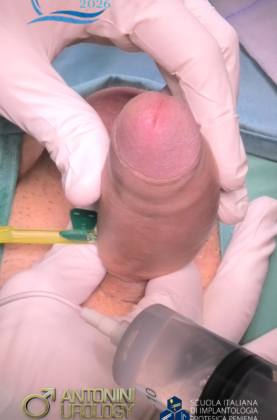
Phimosis is a medical condition affecting the foreskin, the skin covering the glans of the penis. It occurs when the foreskin cannot be returned to its original position after being retracted. In this state, the foreskin becomes trapped behind the glans, causing edema, which is an accumulation of fluid in the surrounding tissues, leading to painful swelling of the area. Phimosis is considered a medical emergency that requires prompt intervention to avoid more severe complications, such as necrosis of the glans.
The main cause of phimosis is the difficulty in retracting the foreskin, which may occur due to local infections, inflammations, or post-surgical scars. Another triggering factor may be improper or excessive hygiene practices, which damage the foreskin’s skin and facilitate its retraction behind the glans. The treatment of phimosis usually involves manual reduction, if possible, of the foreskin or, in more severe cases, a surgical procedure.
Edema of the foreskin is a condition associated with phimosis. Fluid accumulation in the foreskin tissues causes noticeable and painful swelling, which can make manual treatment difficult. In such cases, surgical intervention becomes necessary to relieve pressure, reduce inflammation, and restore normal blood flow.
Circumcision is often the treatment of choice for severe phimosis, especially when the foreskin cannot be reduced to its original position, or when scarring and adhesions have irreparably impaired foreskin function. Circumcision involves the removal of excess foreskin, a procedure that can prevent future recurrences of phimosis and address the problems associated with difficulty retracting the foreskin.
In some cases, in addition to circumcision, reconstruction of the balanopreputial groove is necessary. This is the area where the foreskin connects around the glans. This procedure aims to restore both the aesthetic and physiological function of the penis by removing scars, improving foreskin mobility, and preventing future adhesions. Reconstruction of the balanopreputial groove is a delicate procedure requiring great precision to avoid damage to the glans and other sensitive structures.
In the context of circumcision surgery and balanopreputial groove reconstruction, post-operative recovery is crucial. The patient must closely follow post-operative instructions, which include proper dressing, pain medication, and, if necessary, the application of ice to reduce swelling and inflammation. Full recovery may take a few weeks, during which it is important to avoid physical strain and sexual activity to preserve the surgical result.
Medical monitoring is also essential to detect potential complications such as infections or recurrences, which may require further treatment. Preventing phimosis in the future can be achieved through proper hygiene of the penis, avoiding excessive use of irritants, and maintaining foreskin health. In some cases, a conservative treatment approach may be recommended to restore the normal mobility of the foreskin, as an alternative to surgery.